Third party solar financing predominantly occurs in two forms.
3rd party solar financing.
A solar company owns and maintains the system while the homeowner can use the electricity generated.
A financing solution for homeowners to gain the benefits of having a solar system on their roof without the upfront costs of purchasing the system.
Third party financing opens the door to thousands of customers that otherwise would not consider solar due to their fear of writing a large check said senior vice president todd lindstrom.
In the lease model a customer signs a contract with an installer developer and pays for the use of a solar system over a specified period of time rather than paying for the power generated.
A solar lease is similar to a solar loan in the sense that both are forms of residential solar financing with zero down solar financing options.
100 loan experience.
Top 4 considerations for solar leases and ppas.
But the similarity pretty much stops there.
With a solar lease you are renting your system from a third party owner.
Third party financing allows more americans to go solar by lowering the cost of solar installation and maintenance of a system.
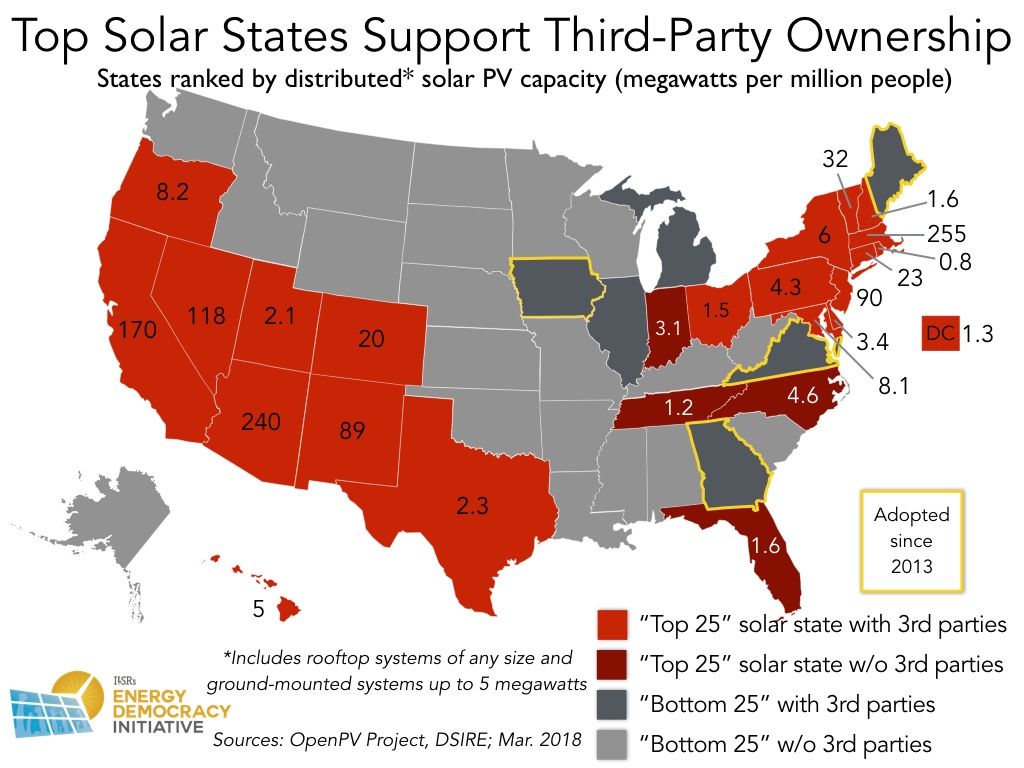
Under the third party financing model consumers buy electricity from a developer who installs owns and operates a rooftop solar plant on the consumer s property.
Solar leases and power purchase agreements ppas.
Third party owner tpo definition.
Offers funding for major purchases debt consolidation medical bills solar power systems and more.
Financing is a big part of going solar and several sunshot initiative awardees are working to lower these costs.
As we explain in our primer on solar financing options under both ppas and leases the pv system is owned by a third party financier rather than the solar developer or the customer who will use the power it produces.
When the time comes to sell one of these homes data shows that even though third party owned systems add some complexity to the real estate transaction the overall impacts are mostly neutral.
Companies continue to develop new products and services to meet growing demand for solar.
Seia is committed to supporting policies that enable this innovation to continue and lower costs for consumers.
We ll start off with ppas and leases two of the most prevalent options for financing c i solar projects.
The developer then sells the power to the consumer under a long term power purchase agreement at a specified price during the contract term typically for 15 to 25 years.